The Passport of Play: How Freename, Glyph, and JustaLab are Defining Web3 Identity and the Future of Wallets
Identity in Web3 is rapidly evolving from a simple login to a fundamental component of the user experience, serving as an individual’s passport, on-chain history, and even playable assets. This shift places the wallet at the center of the ecosystem, positioning it as the backbone of decentralized infrastructure.
I. The Wallet as the Web3 Backbone (Definition & UX)
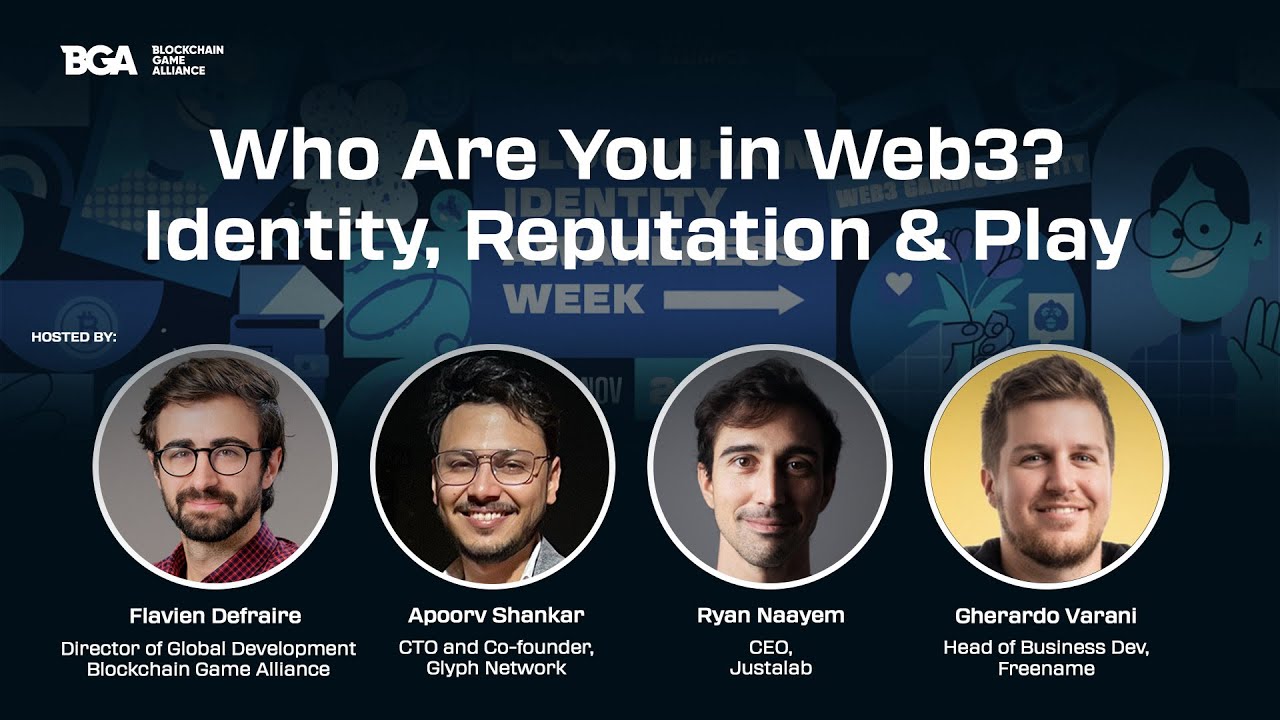
A core challenge to mass adoption is the complexity of wallet addresses (e.g., 0x D3…) which are “impersonal and just generally cryptic,” often leading to data bags being lost due to mistyping. Ryan, co-founder of Just a Lab, explained that the initial goal was solving this UX problem. JustaLab uses ENS protocol-based tooling to allow companies to deploy branded namespaces, like Coinbase’s .cb.id.
Gherardo, Head of Business Development at Freename, affirmed that the wallet is key, always at the center of the experience. Freename focuses on bringing Web3 technology to Web2, allowing users to purchase traditional domains (.com, .xyz) and tokenize them to be used as wallets, thus giving users the ability to name their digital assets. Freename is actively involved in the gaming space, releasing the .sand identity layer for the SANDchain ecosystem.
II. Rethinking Reputation: Beyond Financial Snapshots
The panel strongly argued against the misconception that Web3 identity is merely tied to financial activity. Apoorv Shankar, co-founder of Glyph Protocol, stated that every single transaction signifies an intent, and combined intents signify behavior. Understanding this behavior such as a user surviving drawdowns or participating in governance is essential for customer retention.
Apoorv observed that most games misread their users, rewarding “loudest wallets” and campaign tourists who participate in single bursts of activity, while undervaluing career players. Glyph Protocol, a cross-chain private identity solution, addresses this by insisting that reputation must be timeline-based, not a snapshot of holdings. They identify player behavior across multiple chains and different wallets, acknowledging that every single user has multiple wallets. Gardo supported this view, noting that the creator economy thrives on non-financial chain activities, such as minting emotes or claiming artist assets.
III. Building the Identity Infrastructure (Naming & Standards)
Ryan highlighted that ENS enables programmable identity, allowing users to list and control metadata related to their identity, ensuring the data is owned by the user while enabling application personalization. Identity is defined as a bunch of verified claims, managed by verifiable credentials to automate trust and trigger benefits like personalized loyalty programs.
To combat fragmentation across numerous chains and ecosystems, Ryan stressed the need for foundational protocols to emerge. He views the ENS protocol as a “dominant primitive” with “escape velocity in terms of adoption,” pointing to its integration by major Web2 and Web3 entities, including PayPal, Venmo, and GoDaddy. He suggested that foundational protocols, like ENS for naming services, must mature and be adopted by everyone for the industry to move forward.
As Director of Global Development of the BGA, Flavien is dedicated to fostering strong relationships with current and future members of the Blockchain Game Alliance. He also initiates, coordinates and develops strategic plans to help members gain more visibility through communication, events and partnership.