

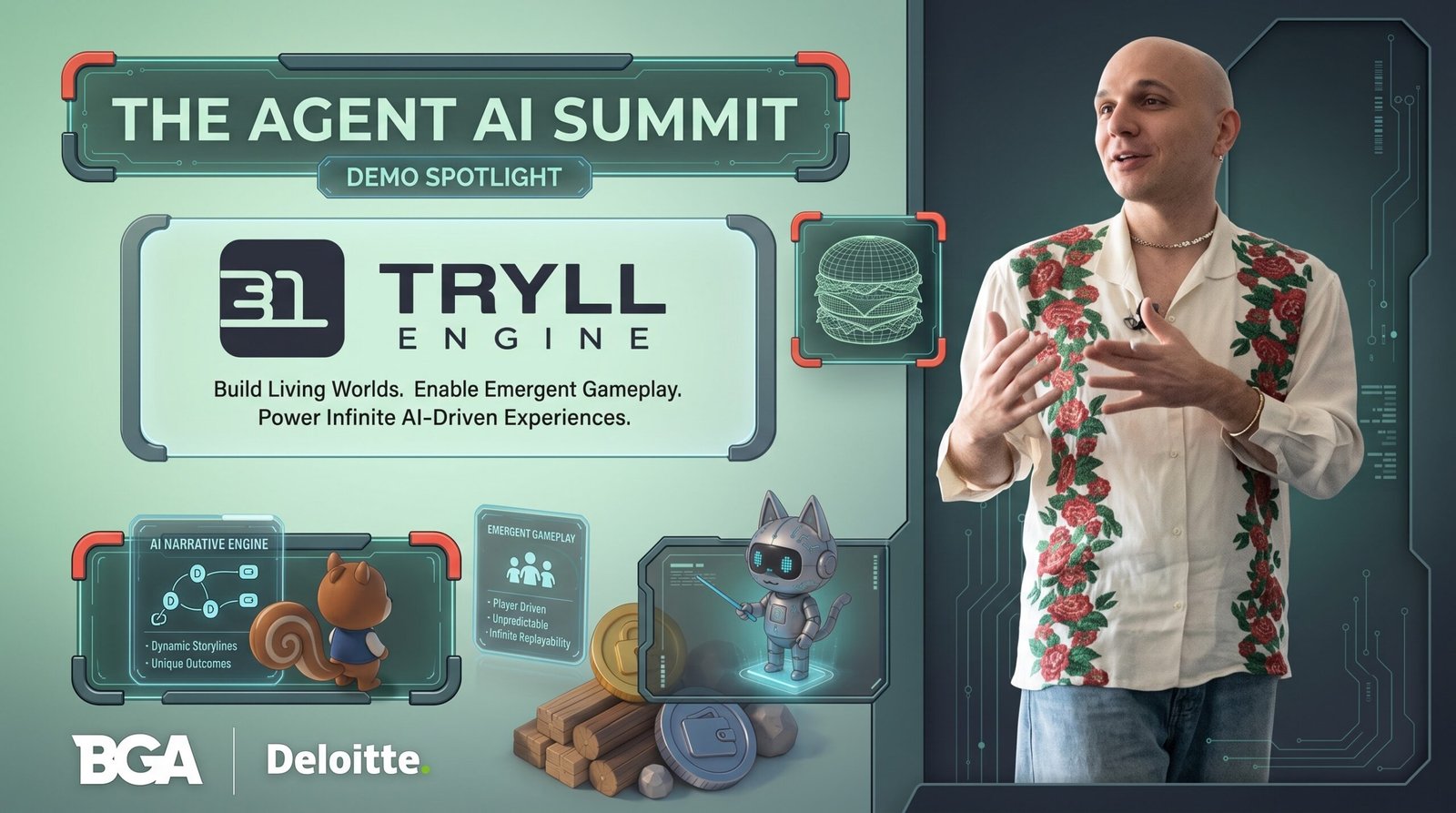
No Tokens, No Cloud: The Local AI Breakthrough Redefining Game Design
For the past two years, the legacy view from studio heads has treated large language models as a pipeline cheat code. They look at AI as a production toll road—a way to slash narrative costs, generate assets, or automate code. Thrill Engine flips the script entirely. They aren’t selling a cloud-based API that taxes developers per token or sends player data to overseas servers. Instead, they’re pushing local, on-device AI directly into the gameplay loop to radically enhance player agency. By eliminating cloud latency and privacy nightmares, they are reinforcing Founders’ Trust and giving players true freedom, all running locally on an 8GB GPU.
The Memory Problem: Catching Up in the Underdark
Sasha hit on a pain point every gamer knows: dropping a massive RPG like Baldur’s Gate for two weeks, coming back to the Underdark on your Steam Deck, and having absolutely no clue what your quests are or why you’re there. The traditional fix is to rely on static quest logs or one-size-fits-all text tutorials that break your Proof of Presence in the game world.
Thrill Engine’s approach builds the AI directly into the game as a localized companion. Because the model runs entirely offline—costing zero tokens per interaction—you simply ask your party members what happened. Using vector database search (RAG) mapped to the game’s lore, the NPC dynamically catches you up based on your exact save state and past actions in a fraction of a second.
Breaking the Dialogue Tree: Frictionless UX in the Interrogation Room
The standout moment of the presentation was their internal “Murder Mystery” interrogation demo. In legacy games, you are bound by a rigid script, usually forced to choose between “Good,” “Bad,” or “Neutral” dialogue options. If you wanted to tell a character off in your own words, you were blocked by the UX failure of raw text parsers and restricted options.
Thrill Engine solves this by letting the game listen. Players can use voice commands or free-form text to confront suspects with dynamically generated evidence. You point, click, find a clue, and organically pressure the NPC with it. The game reacts not to a pre-written branch, but to the exact context of your accusation. The world actually remembers who you killed and what you said, enriching The Cultural Layer of the game and making every interaction hyper-personal.
Hands-Free Combat: Commanding the Battlefield with Voice
What got the developers in the room nodding was the sheer mechanical potential of voice-to-action. Imagine playing a massive strategy game like Total War or Mount & Blade: Warband. Instead of furiously clicking through sub-menus to flank an enemy, you just speak to your troops.
Sasha shared how their lead developer, Milos—an ultramarathoner and mountain biker—plays while on his indoor trainer. He uses voice commands to play hands-free. You devise a strategy with your AI advisor, set a code word like “Charge,” and the AI parses your voice, translates it into engine commands, and executes the maneuver. This isn’t just a basic Alexa gimmick; it’s a profound shift in how we interface with complex game states.
Embracing Flaws: When “Stupid” AI Becomes Great Game Design
Perhaps the most pragmatic use case came from Play X Play’s newly announced co-op comedy heist game, Voice Heist. They aren’t pretending these on-device models are hyper-intelligent supercomputers. Instead, they leaned into the constraints. You control a deliberately “stupid robot.” If the AI misinterprets your command or takes a weird path, it’s not a bug—it’s a hilarious core feature of the game’s design.
Illogical Studio is doing something similar with a cyberpunk VR experience, building a virtual trader who might invent fake prices or try to hustle you if you aren’t careful. This is how you build real mechanics: by embracing the tech’s current reality rather than waiting for a perfect model.
Bottom Line
The era of treating AI solely as a server-side cost center is ending. Thrill Engine is proving that when you remove the anxiety of token costs and always-on cloud requirements, you empower indie developers to treat AI like any other tool—a physics engine for dialogue, logic, and behavior. By offering their engine for free and deferring their 0.5%–1% revenue split until a studio hits real commercial success ($300k+ in revenue), they are putting the power directly back into the hands of the creators. We don’t need more empty hype; we need infrastructure that gets out of the way and lets players actually play.
Let’s keep building.

Tags
Recent Posts