Beyond Siloed Economies: Grampus and the Next Era of Shared Asset Utility
We’ve spent years listening to Web3 studios pitch “interoperability” like a magic spell. Most delivered empty buzzwords or useless cross-over skins that left players cold and studios broke. But sitting down with Angela from the Grampus team to test their title, Uncharted Tycoons, reminded me what pragmatic building actually looks like.
Grampus isn’t trying to tear down traditional gaming. They are orchestrating a practical Gaming Evolution by answering a fundamental operational challenge: how do you give lasting, cross-game utility to digital assets without breaking game balance or boring your audience?
Here are the core takeaways for game founders and creators building on the frontier.
1. The “Shared Treasury” Engine: Multi-Game Utility Over Isolated Islands
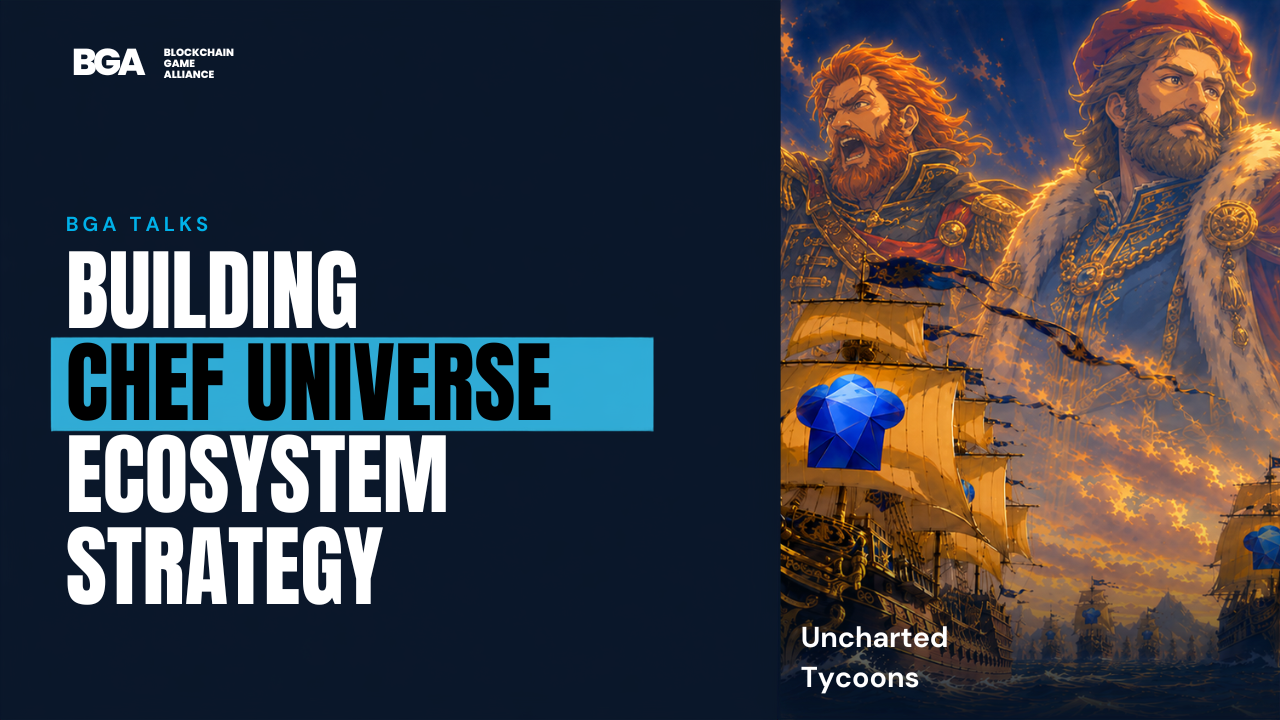
In traditional gaming and early Web3 models, every game is a walled garden. You buy currency or an asset in Game A, and its utility dies the moment player attention shifts elsewhere. Grampus flips this paradigm with their Chef Universe, built around 129 planned ERC-20 ingredient tokens pegged to their ecosystem token, $CHEF.
Shared Economic Arteries: Instead of forcing a single token into every role, specific ingredients carry distinct utility across titles. Wheat powers ship voyages in Uncharted Tycoons, while future titles might leverage Olives or Milk.
Cross-Game Feedback Loops: Actions taken inside Uncharted Tycoons automatically trigger rewards on The Bazaar’s global “Tycoons Arena” leaderboard.
Founders’ Takeaway: Building a multi-title ecosystem isn’t about shoehorning 3D character models from one title to another. It’s about constructing shared liquidity arteries where an action in one game deepens engagement across your entire portfolio.
2. Widening the Net: “Play Like a Gamer, Think Like a Trader”
One of the biggest operational bleeds in Web3 game development is hunting exclusively for a mythical user base. The pure “Web3 gamer” pool remains relatively small and notoriously difficult to isolate. Grampus recognized this early and expanded their scope to target the broader crypto-native audience deployed on Base.
By blending 4X maritime strategy with onchain trading mechanics, Uncharted Tycoons turns market arbitrage into visceral gameplay.
Sailing high-risk pirate routes yields higher profit premiums on ingredient tokens, forcing players to balance combat power against cargo risk.
This isn’t speculative noise; it’s gamified trade logistics. Founders’ Trust is earned when mechanics respect both the strategic mindset of a gamer and the risk-reward calculus of a trader.
3. Living Autonomous Agents: AI as an Economic Anchor
Instead of relying on passive NPCs with static dialogue trees, Grampus introduced Marco Polo—an autonomous merchant agent operating with its own treasury and logic inside The Bazaar.
Marco Polo actively trades ingredient tokens based on real-time market momentum and highlights undervalued assets.
He serves as a dynamic Proof of Presence within the economy, acting as a real-time guide for new users navigating price adjustments and token liquidity.
This provides a practical blueprint for how AI agents can act as economic catalysts rather than superficial gimmicks.
The Bottom Line
The true promise of digital ownership was never about selling isolated digital assets. It’s about creating connected, resilient economic systems where every asset spent or earned across a studio’s suite of titles holds continuous, tangible utility. Grampus is proving that when you focus on sustainable cross-game utility rather than short-term hype, you build an ecosystem that actually lasts.
As Director of Global Development of the BGA, Flavien is dedicated to fostering strong relationships with current and future members of the Blockchain Game Alliance. He also initiates, coordinates and develops strategic plans to help members gain more visibility through communication, events and partnership.