
Designing Web3 Retention and Rewards with Behavioral Intelligence
Current metrics in Web3 gaming are failing the industry by mistaking anonymous token activity for genuine player growth and retention. This interview explores, with our member Glyph, the “Behavioral Economy” framework, which offers a new path to long-term profitability by giving ecosystems the tools to finally see and reward their most valuable, loyal players.
What was the original problem you believed YGG : and Web3 gaming more broadly : were failing to see?
We believed Web3 gaming was missing its most critical ingredient: personification.
In a world of anonymous wallets, everyone looks the same. Without a way to distinguish players by behavior, intent, and progression, the industry has been optimizing the wrong things. Token activity was treated as a proxy for player growth : but on-chain signals like quests completed or tokens moved don’t tell you whether someone is actually progressing in a game.
Our hypothesis was simple: much of what looked like “growth” was really surface-level activity : wallets touching tokens without entering meaningful gameplay loops. This isn’t unique to YGG. Across Web3 gaming, user counts, DAU, and engagement are inflated by one-time actors and incentive hunters, while the players creating long-term value remain invisible.
The economy wasn’t failing : it was being measured through the wrong lens. Progression is behavioral, not transactional. That’s why a privacy-preserving identity layer is essential: it allows ecosystems to understand continuity without de-anonymizing players, and finally see who is actually growing with the game.
Can you explain your “Behavioral Economy” framework?
Web3 lacks the infrastructure that allowed Web2 games to scale: understanding people, not just accounts.
Our Behavioral Economy framework is built on one idea: to design sustainable economies, you must understand three dimensions together:
1. Behavioral Intelligence : how players act, what loops they repeat, where they deepen or drop off.
2. Economic Intelligence : how value flows: who reinvests, who extracts, who sustains the system.
3. Mobility Intelligence : how players move across chains and ecosystems, revealing intent and fluency.
Individually, these signals are incomplete. Combined, they reveal true progression: who actually advances, who stabilizes value, and where loops break or compound. In YGG’s case, this made it clear that a smaller mid-tier cohort drove most meaningful activity, while many “active” wallets showed no real progression.
That’s what we mean by a behavioral economy: understanding why an economy behaves the way it does, not just what’s happening on-chain.
What’s fundamentally broken about how Web3 measures success today?
Web3 still measures activity, not players.
Metrics like DAU, wallets, quests, and TVL are easy to count on-chain, but they collapse very different behaviors into the same bucket. A loyal player and a one-time reward claimer look identical. Multi-wallet users inflate growth. Bots and Sybil activity distort engagement. As a result, ecosystems mistake noise for traction.
The YGG case study showed that once you analyze users through behavior, value flow, and mobility, the story changes. What looked like growth often wasn’t progression. What looked like churn was sometimes exploration and return. Real retention only became visible when activity was interpreted as patterns over time.
Success isn’t about how many actions occur : it’s about how many players deepen their relationship with the ecosystem.
How does this change the conversation around retention?
It shifts retention from guesswork to precision.
Most Web3 retention strategies rely on pushing more incentives and hoping users stay. Behavioral intelligence changes that by revealing who can actually be retained : and who won’t be, no matter how much you spend.
It allows teams to stop overpaying mercenary users, allocate rewards based on real progression, predict churn instead of reacting to it, and align retention with economic health rather than emissions.
Instead of asking “How do we keep everyone active?”, studios finally ask: “Who should we keep, why, and at what cost?”
You highlight mid-tier and whale cohorts as YGG’s real core. What does that say about reward design?
It’s not about favoring one cohort : it’s about precision.
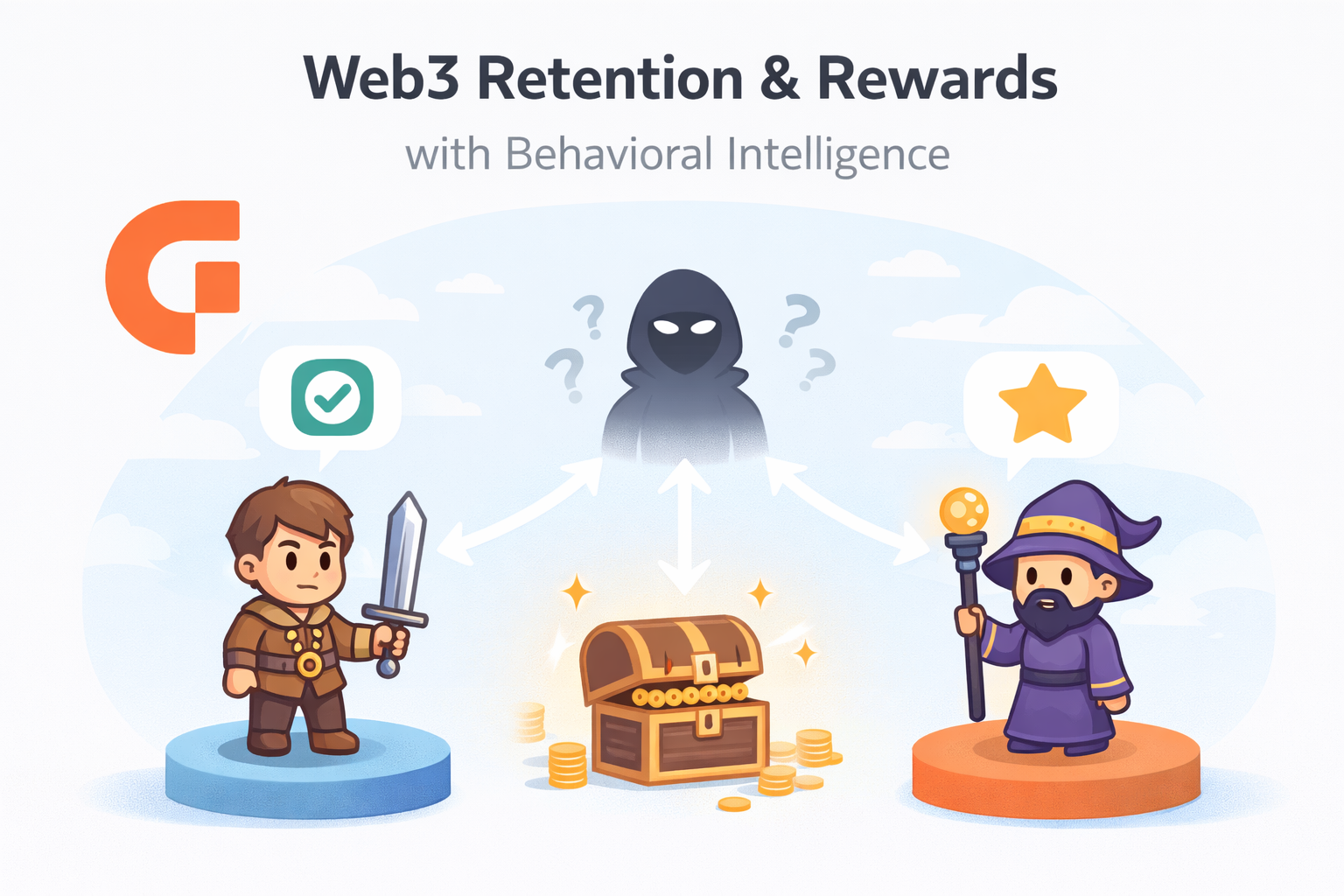
Different players respond to different incentives. Newcomers need confidence. Mid-tier players need progression. High-value contributors need recognition. Flat, generic reward systems fail because they ignore intent.
With behavioral intelligence, rewards become adaptive: progression-based, contribution-aware, and aligned with long-term value rather than short-term extraction.
Rewards shouldn’t be equal : they should be intentional.
If a studio wants to stop overpaying mercenary users, what should they optimize for?
One shift: stop measuring activity, start measuring alignment.
Mercenaries spike once and disappear. Aligned players repeat loops, reinvest, and progress even when incentives are modest. Signals like repeat behavior, upward progression, and reinvestment matter far more than one-off actions.
When rewards target alignment instead of presence, mercenaries naturally fall away : without aggressive filtering.
Ultimately, what future are you trying to build with this intelligence layer?
OA future where Web3 gaming is durably profitable, not perpetually subsidized.
The play-to-earn era failed because it optimized for token velocity over player value. Web3 lacked the behavioral and identity foundations that underpin Web2’s $180B industry.
With privacy-preserving identity and behavioral intelligence, ecosystems can finally design retention instead of bribing it, monetize progression rather than speculation, and back aligned cohorts instead of inflated metrics.
The goal isn’t more wallets. It’s more clarity.
Behavioral intelligence is the missing economic infrastructure. Unified ID and SITA9 are the rails that make it usable : allowing Web3 to adopt the best of Web2’s growth foundations while staying true to ownership, privacy, and openness.

Recent Posts