BGA Panel: Navigating the Agentic Frontier in the Post-AI Gaming Era
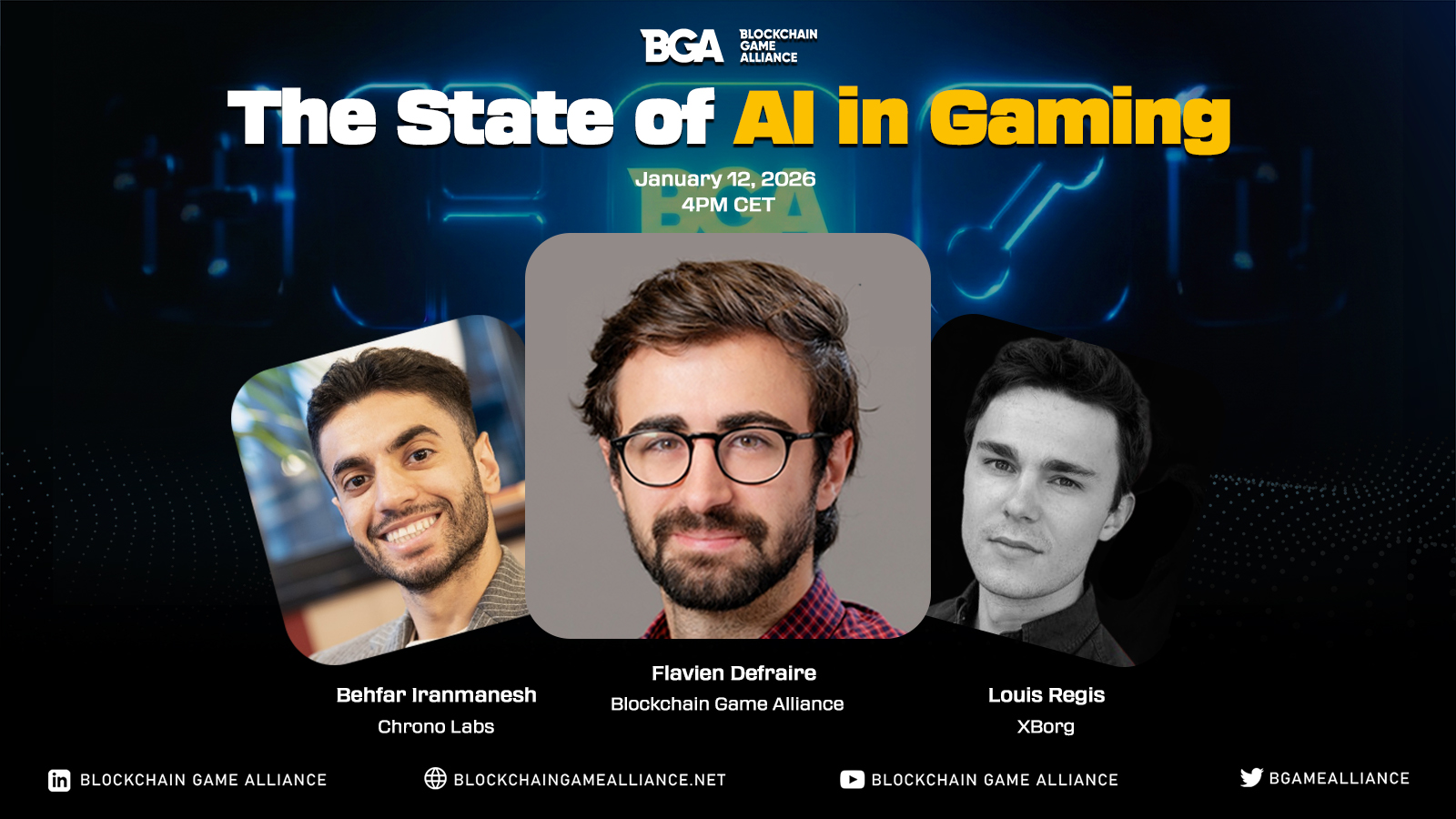
This article explores the shifting landscape of artificial intelligence in gaming, drawing from a panel discussion hosted by the Blockchain Game Alliance (BGA) during their “AI Week”. The conversation featured insights from Louis Régis, CEO at XBorg, and Behfar Iranmanesh, CEO at Chronolabs, as they navigated the transition between the “pre-AI” and “post-AI” eras of the industry.
The gaming industry currently stands at a definitive crossroad between what experts describe as the “pre-AI” and “post-AI” eras. According to the Blockchain Game Alliance (BGA) State of the Industry report, nearly 46% of respondents view AI as a game-changing catalyst for growth, though this optimism is tempered by a rising defiance against “AI washing,” where the technology is used more as a marketing buzzword than a functional value-add. As the industry navigates this transition, the conversation has shifted from simple automation to the complex integration of agentic AI and its synergy with blockchain technology.
The Spectrum of Sentiment: Opportunity vs. Risk
While nearly half of the industry sees AI as a growth engine, about 26.5% of stakeholders believe it is equally likely to create risks as it is to provide benefits, and 20% view the technology as overhyped in the short term. For major corporations, the primary hurdles are regulatory and legal, particularly regarding GDPR compliance and the ambiguity of Intellectual Property (IP) rights for AI-generated 3D assets. Large Fortune 500 companies often move slower in adoption because the cost of implementing frameworks for AI-generated content, while ensuring data protection, remains prohibitively high. In contrast, startups are more agile, often utilizing “vibe coding” to rapidly prototype products, though this approach can introduce significant security and scalability risks.
From Chatbots to Agentic Systems
The industry is witnessing a natural evolution from basic chatbots to agentic AI, which ranked as the second most implemented AI area by surveyed companies. Unlike early chatbots that served as simple interfaces for LLMs, agentic systems can take autonomous actions across distributed systems, such as researching resources or calling various APIs to complete a specific task.
In the gaming and esports sectors, these agents are being leveraged to:
- Enhance Fan Engagement: Platforms like XBorg use AI “copilots” to listen to data feeds and automatically suggest the best times for creators to post content for maximum engagement.
- Revolutionize NPC Interaction: Chronolabs is transforming game characters and mascots into autonomous agents that can interact with users on social media or in-game, serving as persistent companions rather than static figures.
- Optimize Monetization: AI agents can analyze user interaction data to determine the precise moment a conversion—such as an in-app purchase—is likely to occur, allowing for highly personalized monetization strategies.
The “Moat” of Data and Distribution
As AI models like Opus 4.5 become increasingly advanced, the technical “moat” for many companies is shrinking, as anyone can technically “vibe code” an app using a prompt. Experts suggest that the new competitive advantage lies in niching down and securing first-party data that larger models cannot access. For instance, owning the platform where fans interact allows teams to generate primary data on fan retention and sentiment that competitors cannot easily replicate. Ultimately, as the cost of technical production drops toward zero, distribution and community bootstrapping become the primary markers of a successful game.
Human Creativity and the Blockchain Synergy
A common concern is the potential loss of human creativity, yet industry leaders argue that AI should follow a “human thinks, AI executes” model. Much like TikTok provided easy video-editing tools that empowered users to express themselves, AI is viewed as a tool for creative expression that allows users to manifest the stories and games they envision.
Furthermore, the intersection of AI and blockchain provides a solution for the “financial rails” that agents require. Because an AI agent cannot open a traditional bank account, blockchain serves as the only viable payment infrastructure for billions of future agents to pay for services or receive compensation. Additionally, blockchain technology can provide verifiable inference to ensure that an agent’s actions are legitimate and transparent, a necessity for games that aim to be “provably fair” to their players.

Recent Posts