The Gaming Evolution We Need: Why OlaGG is Swapping Speculation for Stablecoins
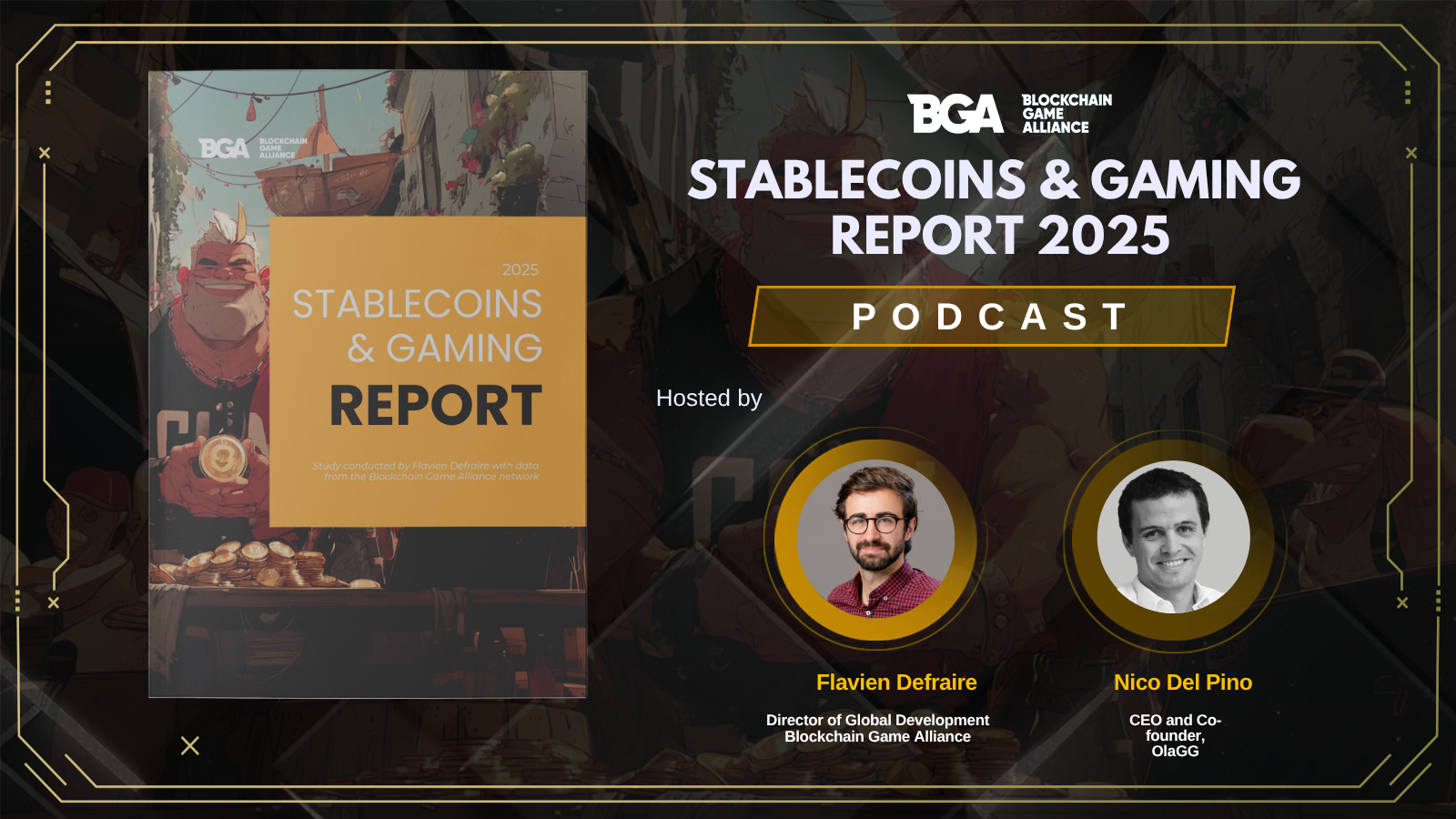
On the latest episode of the BGA Podcast “Stablecoins in Gaming”, I sat down with Nico Del Pino, CEO of OlaGG. Nico has been in the crypto trenches for over a decade, primarily building for the Latin American market. What his team is building next is a completely new paradigm. Here is why the next wave of Web3 gaming could also run on stablecoins, not hype.
The End of the “Printed Money” Honeymoon
For a brief, chaotic window, game developers operated like micro-nations, recklessly printing tokens without understanding the macroeconomic gravity of inflation. Nico put it bluntly: building a sustainable economy is incredibly hard. When you invite players into an ecosystem purely to extract liquid tokens to sell, the system bleeds out.
We are finally moving past this. The Gaming Evolution requires us to stop relying on magic internet money to hook players. Instead of treating in-game economies like a casino, founders are starting to treat them like sustainable financial ecosystems.
Stablecoins as The Cultural Layer
For me in France, a stablecoin might just look like a neat cross-border payment rail. For Nico in Argentina, it’s a lifeline. In regions battling aggressive local inflation, thinking in USD is a survival instinct.
OlaGG recognizes that stablecoins are the ultimate bridge between traditional banking’s restrictive walls and DeFi’s open frontier. They aren’t just a backend tool; they form The Cultural Layer of the Latin American Web3 experience. By integrating stablecoins, OlaGG isn’t just enabling microtransactions but they are offering an escape hatch from local economic instability.
The “Play-to-Save” Paradigm
Here is the most pragmatic, brilliant shift I’ve seen in a while: the gaming industry is designed to make you spend. OlaGG’s upcoming AI-driven game is built on the exact opposite premise. It’s built around the ethos of Don’t Spend.
Think of it as the Yield-Bearing Fortress. Instead of charging players a toll to play, the game uses stablecoins as a ticket to participate. Players deposit their money, and the game leverages established, safe DeFi models to generate yield. You play the game, you build positive financial habits, and your principal remains yours. It’s a clean, zero-extraction intersection of GameFi and financial literacy.
/sepa
Did you miss the other episodes of the podcast “Stablecoins in Gaming” ?
Game First, Finance Second
You can build the most elegant smart contract in the world, but if the game isn’t fun, no one cares. OlaGG understands that their primary metric for success (Total Value Locked (TVL) will mean nothing if players aren’t genuinely entertained.
The team is utilizing AI agents and deep, philosophical lore (revolving around a dystopian “NOX Corporation” and the clash between humans and machines) to build a compelling daily experience. Earning yield is secondary; establishing Proof of Presence within a world that players actually want to return to is the true objective.
The Bottom Line: We’ve spent years trying to gamify finance with flashy tokens that inevitably crash. OlaGG is doing the reverse by using a real game, powered by stablecoins and AI, to build positive, long-term financial habits. They aren’t trying to build a better casino; they are trying to build a better bank disguised as a video game.
📖 iGaming & Web3 Glossary: Key Concepts
- Stablecoins: On paper, these are cryptocurrencies pegged to a stable asset like the US dollar. In reality, they are The Cultural Layer of emerging markets. They are no longer seen “just as a payment rail, but as the core engine of a totally new gaming philosophy”. They protect players from local currency devaluation and serve as the foundation for sustainable game economies.
- Play-to-Save: The pragmatic successor to the broken Play-to-Earn model. Instead of extracting value from players, this model focuses on “building games that don’t require users to spend their money”. It operates on a simple ethos: “You can save to play, or you can play to save”. Players use their deposits as a ticket to participate, earning yield and learning positive habits while their principal stays untouched.
- Total Value Locked (TVL): The ultimate metric of Founders’ Trust. In the DeFi world, TVL is “the first and foremost DeFi metric that speaks about how many dollars trust your platform and how robust the whole system is”. If a game has a high TVL, it means players trust the developers with their actual wealth, not just their screen time.
- Governance Tokens (The Speculative Era): The volatile, native tokens that the industry used to be obsessed with. Printing these tokens out of thin air was a “cheat sheet” for user acquisition. While they created a short-term illusion of growth, they frequently led to pump-and-dump cycles, “oftentimes leaving the players empty-handed”.
- True GameFi: The clean, uncorrupted intersection of gaming and decentralized finance. Instead of just gamifying a banking app , True GameFi builds an incredibly fun, deep video game first, and lets the financial yield mechanics run seamlessly in the background.
- Proof of Presence: It’s not just about what digital assets you own; it’s about proving your genuine engagement and time spent in an ecosystem. When a game respects your attention rather than just your wallet, your presence becomes the most valuable metric in the community.
- Vibe Coding / AI-Driven Development: Using artificial intelligence to dynamically build the game’s world. For OlaGG, “the whole game is being built with AI. It’s vibe coding in the end”. This means AI agents actively generate characters, art, and quests, making the game smarter, more responsive, and deeply tailored to player behavior.

Tags
Recent Posts