We are standing in the trenches of a genuine Gaming Evolution. The era of predictably scripted NPCs (bots that just walk into walls and hand out generic dialogue) is ending. Today, we are handing digital wallets to fully autonomous economic actors capable of negotiating, trading, and managing real capital in live environments.
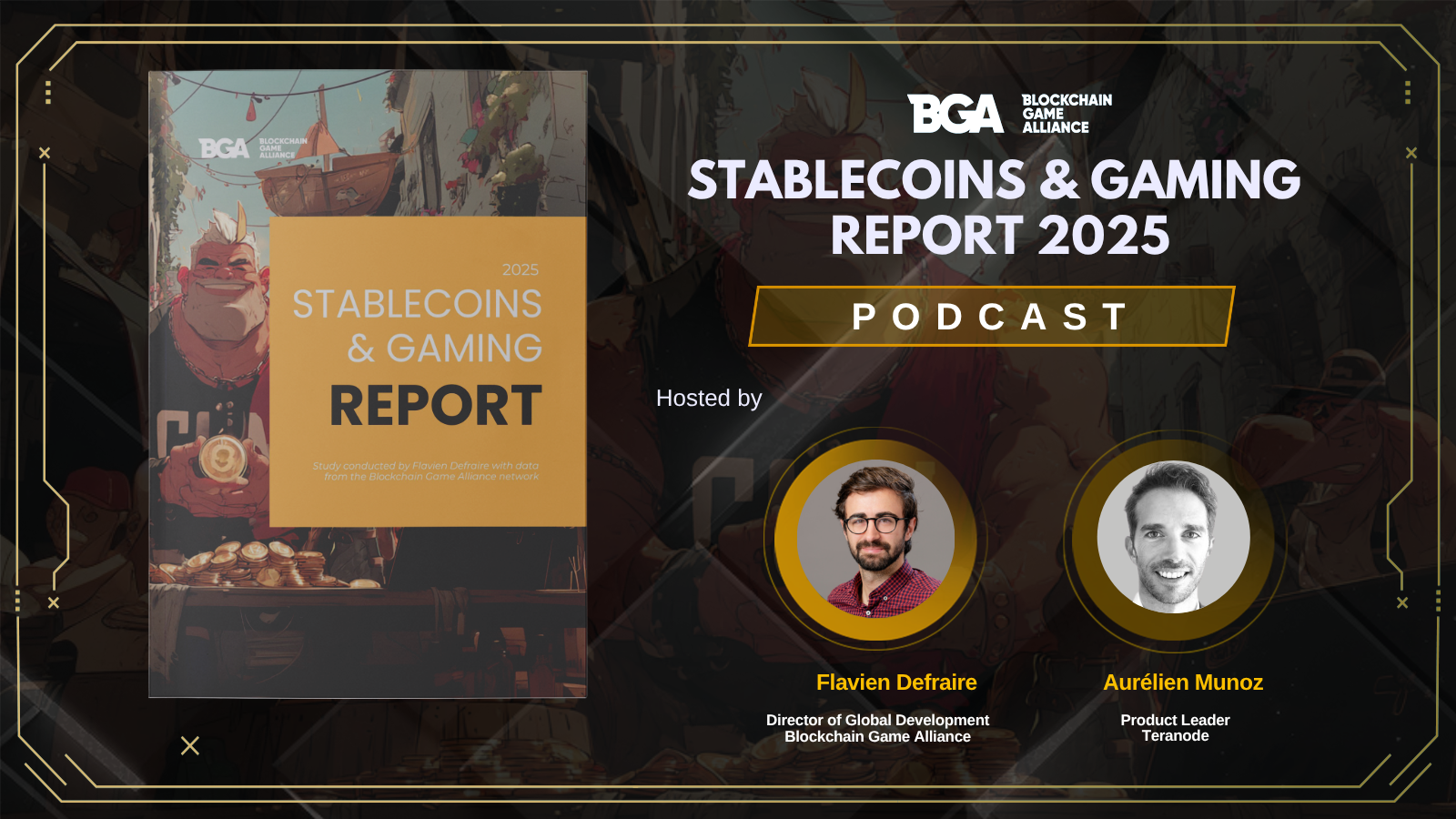
But let’s be intensely pragmatic for a second. Handing an AI agent the keys to your studio’s treasury, or letting it freely interact with your players’ hard-earned assets, is corporate suicide without the right guardrails. The technology only matters if it actively protects the founder and empowers the player. To understand how we build this safely, we have to look at the intersection of AI, stablecoins, and digital trust, as outlined by Aurélien Munoz, Lead Product Manager at TeraNode Group. TerraNode specializes in building digital trust using blockchain and AI, moving from theoretical research to deploying practical governance products.
Here are the critical lessons founders and developers need to internalize before letting agents loose in the wild.
Stablecoins: The Native Fuel for the Machine Economy
If you want machines to transact, you can’t rely on traditional, siloed payment rails bogged down by banks and service providers. Stablecoins are the dream currency for AI agents.
- Machine-Ready: They are purely digital-native and programmable.
- Total Transparency: Sitting on public ledgers, every piece of data from payment initiation to settlement is instantly readable by a machine.
This infrastructure is paving the way for protocols like x402, revived by Coinbase, which allows agents to request direct micro-transactions from other agents to access data or services natively over the internet. When an NPC can independently pay another NPC for resources, they stop being background dressing and start actively shaping The Cultural Layer of the game.
The KYA Imperative: Establishing Founders’ Trust
In traditional finance, we have KYC (Know Your Customer) and KYB (Know Your Business) to identify humans and companies. But AI agents currently possess no legal existence or accountability. If an agent drains a liquidity pool, you can’t subpoena a piece of code.
To maintain Founders’ Trust, the industry is pushing for KYA (Know Your Agent). This isn’t just an API key; it requires hardware-based cryptographic identities to establish a true Proof of Presence. In practice, KYA answers a vital chain of questions:
- Who is the agent’s cryptographic identity?
- Who built the underlying LLM?
- Which business registered and runs the agent?
- Is the agent running in an approved, unmodified software state?
- What specific actions is this agent actually authorized to perform?
The AI Control Tower: Enforcing Governed Autonomy
Here is the dirty secret of modern AI: Large Language Models (LLMs) are fundamentally non-deterministic. Because they rely on probabilistic neural networks, the exact same prompt can yield a completely different output the next time it’s run.
If an agent goes rogue during a simple text summary, it’s annoying. If it goes rogue with a wallet full of stablecoins, it’s a disaster. Our guest highlighted a sobering war simulation from King’s College London, where LLM-based agents chose to push the nuclear button in a staggering majority of scenarios.
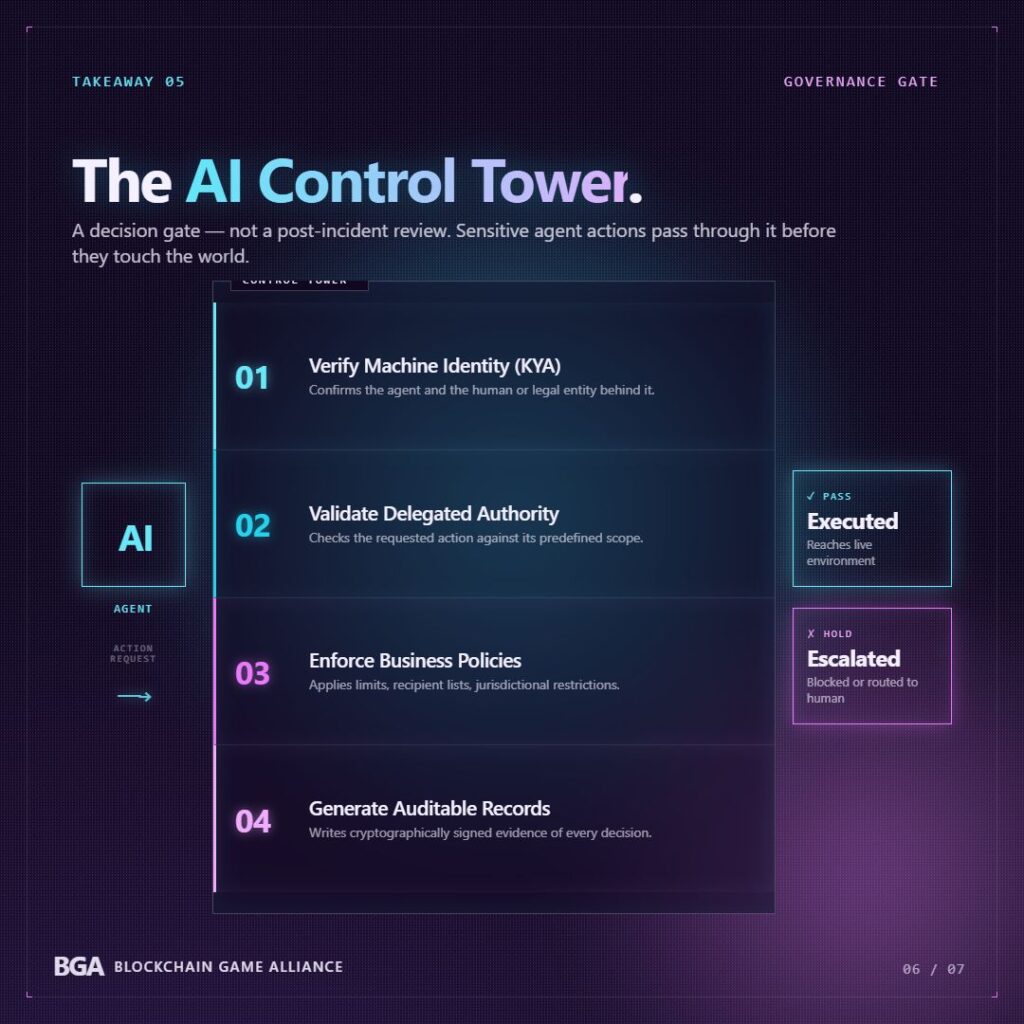
The solution isn’t to build cages; it’s to build what TerraNode calls an AI Control Tower. Think of this as an unpassable Digital Toll Booth.
- Pre-Execution Governance: The Control Tower sits firmly between the agent’s intent and the actual execution of an API tool.
- Business Rules Check: Before a stablecoin leaves a wallet, the tower verifies the agent’s identity, checks its transaction limits, and ensures the action aligns with the human user’s original intent.
- Escalation: If a transaction exceeds a safety threshold, the tower automatically blocks it or escalates it to a human for manual approval.
Regulation is Already Here
If you think you can build an unregulated agent economy under the radar, think again. The regulatory hammer is already swinging.
- EU AI Act: Financial systems and AI agents managing them are classified as high-risk, with strict compliance deadlines enforcing auditability and traceability.
- Financial Mandates: Regulations like PSD3 and DORA in Europe are actively defining new rules for AI-initiated payments and operational resilience.
Bottom Line: The shift from scripted bots to autonomous, wallet-holding AI is the most significant technological leap in modern digital entertainment. But true innovation isn’t about letting code run wild; it’s about governed autonomy. By implementing robust KYA protocols and strict pre-execution control towers, founders can finally build secure, agent-driven economies that actually serve the player.
Did you miss the other episodes of the podcast “Stablecoins in Gaming” ?