Why Self-Custody and Stablecoins are the Real Trojan Horse
Let’s be completely unfiltered for a second: we all wanted blockchain gaming to be the golden egg that brought crypto to the masses, but the harsh truth is that we simply weren’t ready. The technology was clunky, wallets were confusing, and the industry got entirely distracted by the “smoke and mirrors” of tokens that skyrocketed and crashed twice as fast.
But if you spend enough time gathering Proof of Presence with the actual builders in the space, you realize that the narrative has shifted. We are moving away from “Web3 hype” and actively building the invisible infrastructure of the Gaming Evolution.
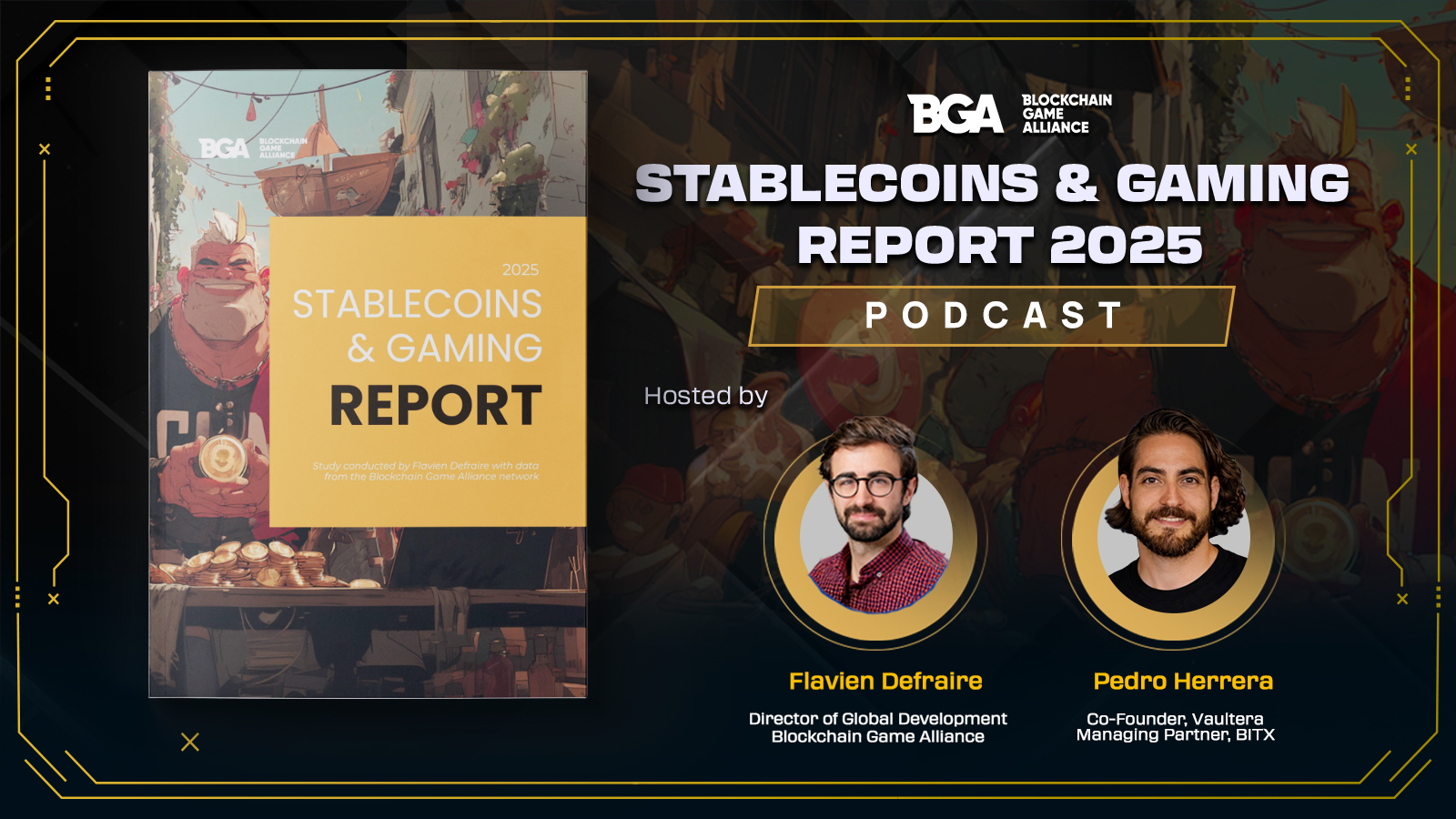
I recently sat down with Pedro Herrera, managing partner at BitX and co-founder of Voltera, to discuss exactly this. Pedro brings a heavy finance background from the Big Four and a deep understanding of gaming analytics. Our conversation made one thing incredibly clear: stablecoins and self-custody are quietly solving the biggest bottlenecks in the global gaming economy.
Here is why the future is actually brighter than the hype ever was.
1. Gamers are the Ultimate Trojan Horse for Self-Custody
If you want to understand the future of digital finance, look at gamers. Gamers (largely Millennials and Gen Z) already implicitly understand the value of digital assets; trading a virtual skin for thousands of dollars makes perfect sense to them, even if older generations find it absurd.
However, traditional gaming models harbor a massive flaw that gamers are waking up to:
- The Illusion of Ownership: In most traditional games, when you spend time and resources acquiring a digital item, it lives on a centralized server belonging to the studio.
- The Risk of Deletion: If that studio shuts down their servers, or if a player gets banned, they lose absolutely everything.
This dynamic makes gamers uniquely primed for self-custody. When you provide a player with true ownership of their assets—allowing them to hold items in a wallet they actually control—you aren’t just selling them a gimmick; you are empowering them with autonomy.
Did you miss the other episodes of the podcast “Stablecoins in Gaming” ?
2. Fixing the “Invisible Bleed” for Game Founders
While self-custody addresses The Cultural Layer for players, stablecoins address the brutal financial reality for game founders. Global game studios inherently operate across borders, meaning they are constantly battling a legacy banking system that bleeds them dry.
Pedro highlighted the massive operational leaks that global merchants face:
- High Conversion Costs: Studios lose significant capital to FX fees at every step of a cross-border transaction.
- Banking Delays: Relying on legacy infrastructure leads to slow payouts and subsequent customer complaints.
- The Cost of Opportunity: Capital is often left sitting idle in bank reserve accounts, generating zero yield while waiting to be cleared.
To put it in perspective, Pedro noted that a midsize company generating $50 million in revenue might lose 5% to 6% of it just to FX fees, delays, and lost yield opportunities. By utilizing stablecoins, studios can execute intercompany transfers and treasury operations globally without these massive operational expenses.
3. Regulation is the Ultimate Catalyst for Founders’ Trust
We cannot scale this ecosystem without Founders’ Trust, and that trust requires regulation. The “Wild West” days are behind us, and we are finally seeing frameworks that protect consumers and legitimize the tech.
This is where the European MiCA framework is proving to be a game-changer. Under MiCA, gaming studios do not need to take on the agonizing burden of becoming licensed financial entities themselves. Instead, they can partner with regulated payment and settlement layers. For example, Vitex—which is currently transitioning from a VASP to a CASP under the MiCA framework—allows studios to integrate stablecoin infrastructure via a simple API.
The infrastructure provider handles the complex compliance, risk, and transaction monitoring, leaving the game founders to do what they do best: focus entirely on delivering an incredible gaming experience.
The Bottom Line
The next cycle of gaming won’t be defined by speculative token prices. It will be defined by sustainable economies utilizing stablecoins to eliminate friction, and blockchain rails that silently give players true custody of their time and assets. We are finally replacing the hype with highly functional, invisible tech. Let’s keep building.
📖 iGaming & Web3 Glossary: Key Concepts
- CASP (Crypto-Asset Service Provider): The regulatory designation that represents the next phase of evolution for virtual asset providers under the MiCA framework.
- De-banking: A challenge faced by operators in certain verticals, such as casinos, where traditional banks close their accounts because the banking institutions are becoming increasingly risk-averse.
- FX Fees (Foreign Exchange Fees): High conversion costs that cause global gaming operators to bleed revenue during cross-border transactions. These fees, along with banking delays, can cost midsize companies up to 5% to 6% of their monthly revenue.
- GameFi: The integration of financial components into pure gaming. The model experienced significant setbacks when projects tied their success to highly volatile native tokens that collapsed in value.
- MiCA: A regulatory framework that was announced in 2024 to provide consumer protection and compliance standards. It guides companies through the process of upgrading their licenses from a VASP to a CASP.
- Self-Custody: A system that gives players true ownership and full control over their digital assets and gameplay stats in a personal wallet. This solves the issue of players losing their purchased items if a centralized studio shuts down its servers or bans the user.
- Stablecoins: Digital assets pegged to a fiat currency (such as the US Dollar or Euro) that provide gaming studios with a more stable alternative to launching volatile native tokens. They allow studios to operate globally without paying bank fees at every step and enable players to trade within a digital economy safely.
- Treasury Optimization: The practice of using stablecoins and digital assets to efficiently manage a company’s cash flows. It allows businesses to run intercompany transfers across different jurisdictions without major operational expenses and turns mandatory capital reserves into yield generators.
- VASP (Virtual Asset Service Provider): A regulatory license obtained by crypto entities after a lengthy process, permitting them to operate as a virtual asset provider. This license is currently transitioning into the CASP designation under new European regulations.

Tags
Recent Posts

Senior QA at DeGaming
Product Owner at DeGaming